The Bee&B
How my daughter's intervention turned my patio into a five-star insect resort.
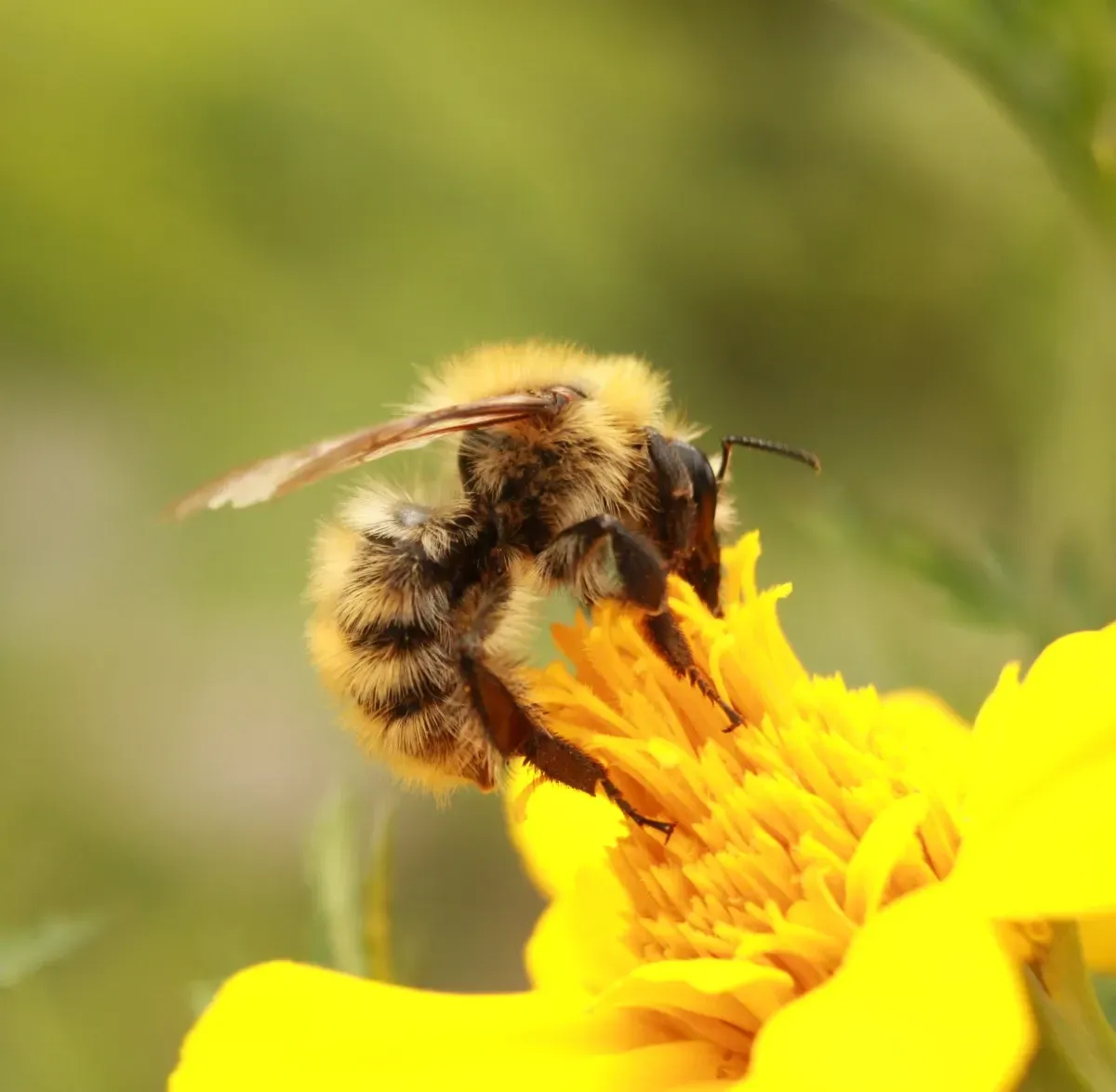
Jennifer was over for tea (still no milk, the heathen) when she caught me mid-rant. I was passionately explaining to a very unimpressed robin that if he didn't pull his weight with the slug population, my entire garden would look like Swiss cheese.
"You know, Dad," she said, sipping her milkless abomination, "for someone who's so worried about the bee-pocalypse, you've got a patio that's about as welcoming to pollinators as a locked pub at closing time. It's all slabs and one sad rosemary bush."
She wasn't wrong. I'd been busy writing about the problem and had done sod all to fix it myself. Like publishing a fire safety manual while my own bin was on fire.
"Right," I said, properly chastised. "What do we do?"
What followed was a crash course in turning any space, from a sprawling garden to a scruffy windowsill, into a proper insect service station.
And it turns out the trick is simply to think like a very small, very fuzzy tourist.
What does the tourist want?
Food, a bed, and nobody spraying poison at them while they sleep.
Same as the rest of us.
Stop Serving Junk Food
Most of us plant for our own eyes. We go for flashy, double-petalled blooms that look great in photos but can be about as useful to a bee as a plastic fruit bowl.
In many heavily doubled varieties, all those extra petals come at the expense of accessible pollen and nectar, or simply make the useful bits so difficult to reach that the poor sod needs mountaineering equipment.
So serve proper grub instead.
Think of it as running a pub with real ale, rather than a nightclub flogging fluorescent cocktails.
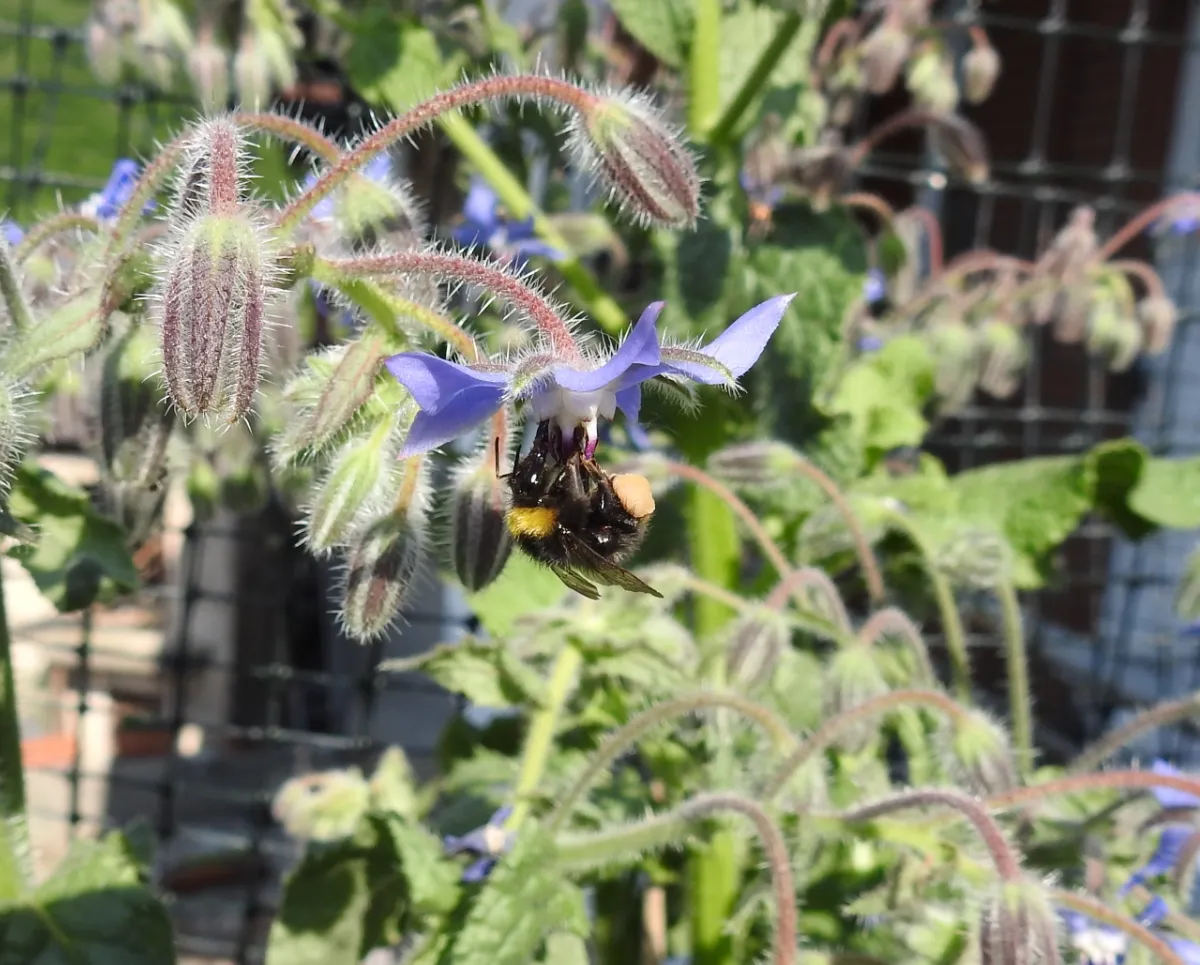
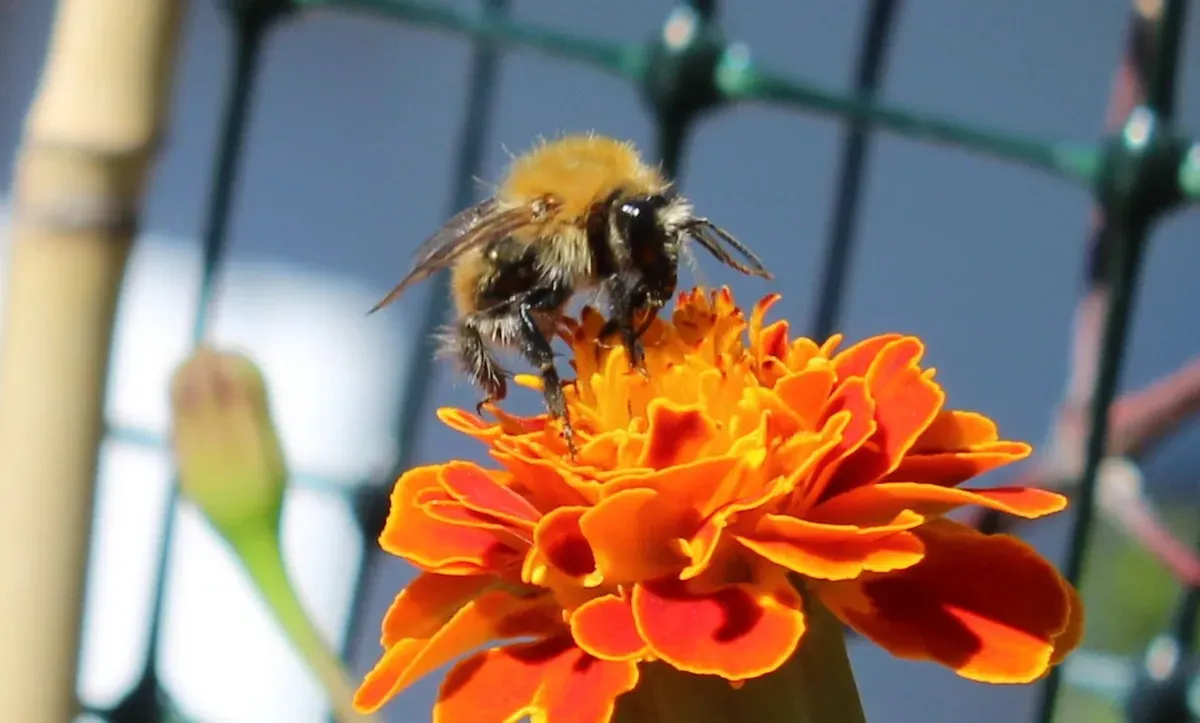
Singles only. Old-fashioned single-petalled flowers usually make life much easier. Lavender, cosmos, poppies, marigolds, especially the simpler varieties rather than the frilly nonsense.
Season tickets. A bee's year runs a lot longer than June. Snowdrops and crocuses can help early on, catmint and borage through summer, then sedum and ivy later in the season.
Ivy, by the way, is the all-night kebab shop of the insect world, still serving when half the respectable establishments have shut.
Small spaces count. A pot of thyme on the balcony, nasturtiums in a box, one lavender by the door. Every stop helps when you're a knackered bee commuting across town.
And if you grow tomatoes, you've got extra reason to roll out the welcome mat.
Bumblebees do a party trick called buzz pollination. They grip the flower and vibrate their flight muscles at just the right frequency to shake loose the pollen.
Honeybees don't buzz-pollinate.
Tomatoes pollinated this way can produce better fruit, so every fat stripy visitor is quietly doing a shift on the harvest while he's at it.
Assuming the stink bugs leave any of it standing.
The Bee&B Itself: Affordable Housing
Jennifer's next salvo was property-related.
"Where are they supposed to live, Dad? It's a housing crisis out there."
Most wild bees are solitary. Around seventy percent nest in the ground, while many others make use of hollow stems, beetle holes and dead wood.
Our obsession with neat gardens, trimmed stems and paved-over patios has removed an awful lot of their housing stock.
The answer is to lower your standards.
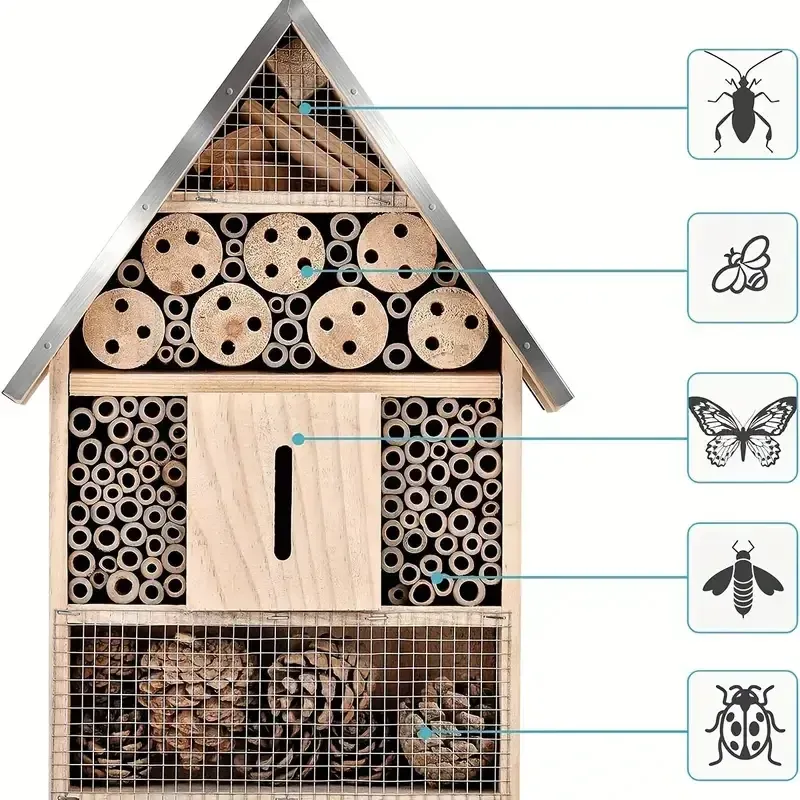
- Luxury suite. A bee hotel can help cavity-nesting species. Buy one or bodge one together with bamboo canes or drilled blocks of untreated wood, then put it somewhere sunny and sheltered from heavy rain.
But don't build the insect equivalent of a 400-room package-holiday resort. Smaller is generally better. Keep the holes smooth, provide a range of sizes, keep the thing dry, and replace or clean nesting material when necessary. Otherwise your boutique bee hotel can become a rather efficient parasite and disease exchange.
Jennifer found a minimalist one online that looks smarter than my shed.
Which isn't saying much, but still.
Studio flat. Leave a little bare soil alone. A sunny patch of undisturbed earth can be prime property for ground-nesting bees.
Fixer-upper. Stack a few logs, leave some dead stems standing, pile broken pots somewhere out of the way.
It looks messy.
For insects, it's prime real estate.
Yes, the neighbours might think you've gone feral.
They can piss off.
Ditch the Chemicals
Spraying insecticide around flowers is rather like fumigating the guest bedroom while your visitors are still asleep inside.
It tends to discourage repeat bookings.
Embrace a bit of chaos instead.
So your roses get a few holes. Big deal. Ladybirds, hoverflies and other predators may turn up and start dealing with some of the troublemakers for free.
They're nature's unpaid nightclub bouncers.
And unlike me, they don't expect tea afterwards.
The Lazy Gardener's Cheat Sheet
Grub: Flowers from spring through autumn.
Housing: Bare soil, hollow stems and dead wood.
Vibe: Less insecticide, less tidying, lower standards.
The Reformed Hypocrite
It doesn't take much.
A pit stop will do. Rewilding the entire back garden would be even better, mind, but nobody's asking that of you.
One pot of flowers. A patch of bare soil. A small bee hotel on a sunny wall. A corner you've deliberately forgotten to tidy.
If enough gardens, balconies and windowsills offered even one of those things, we'd create a network of little insect service stations across our towns and cities.
Jennifer has finished her tea and is back on her phone checking for wasp alerts.
I'm looking at the patio differently.
That boring corner? Perfect for a log pile.
That empty pot? Lavender.
The bees still have plenty of problems, but we're not completely buggered yet.
And frankly, any excuse to be lazier in the garden suits me just fine.
Disclaimer: Creative licence applied. My patio is not, in fact, a barren wasteland of shame.
Photo at the top: taken by me. Macro mode and I are finally on speaking terms.
You can read part one of this story here:
https://catsandbirdsandstuff.com/when-the-bees-go-were-all-buggered/